The ifa Research Award on International Cultural Relations is aimed towards young academics who explore the significance and effectiveness of soft power, international cultural relations and Foreign Cultural and Educational Policy.
Its purpose is to foster academic reflection and innovation in the field as well as its relevance to society. The idea is to strengthen Foreign Cultural and Educational Policy, to promote interdisciplinary exchange to broaden perspectives and bring ifa’s international expertise into German and international debates. In 25 years, 27 academics have been honoured with the award.
The ifa Research Award on International Cultural Relations supports different career levels, giving award winners a high degree of flexibility. Showcasing award winners and their research effectively is the central aim, proposed and co-developed in terms of content by the award winners themselves. This may take the form of a public lecture, a podcast, a short video or another suitable format. The decisive factor is that the chosen format is well suited to the respective research, the researcher’s personal career situation and the intended visibility.
The ifa Research Award also covers printing costs for publication in ifa’s prestigious series “Kultur und Außenpolitik”, made available via open-access work by Nomos Verlag, subject to review by the publisher.
Call for applications: ifa Research Award 2026
What is included in the award?
The ifa Research Award on International Cultural Relations includes:
- publicity through presentation of the award winner and his or her research (e.g. in a public lecture, a podcast or a short video)
- printing costs for publication of the work in the ifa publication series “Kultur und Außenpolitik”, accessible via open-access by Nomos Verlag, subject to review by the publisher.
Who is eligible for application?
Applications can be submitted for young academics by a recommending professor. Their doctoral or master’s thesis must meet the following requirements:
- it has been completed within the last two years (no earlier than 30 April 2024),
- it has received at least magna cum laude (in the case of a doctoral theses) or respectively the second-highest grade,
- it is a scholarly examination of soft power, international cultural relations and Foreign Cultural and Educational Policy and their significance and effectiveness.
- it advances the concepts of soft power, international cultural relations and Foreign Cultural and Educational Policy. It has practical relevance or offers applicability of the research findings to cultural policy, to institutions or intercultural practice. It must be the applicant’s own independent and sound achievement. Recommendation by a professor is required.
Suitable subject areas include the following:
What documents need to be submitted with the application?
Submissions are made by the recommending professor via e-mail and must include the following:
- Complete text of the submitted work in PDF format
- Abstract
- Letter of recommendation from the professor
- Copies of the complete assessment in German or English or documentation in line with local practice of the completed assessment or grading
- Declaration that the submitted work is your own independent work and the date of completion or publication
- Curriculum vitae
- List of publications, if relevant
- Applicant’s contact information (e-mail address, institutional affiliation)
The work may be submitted in German or English.
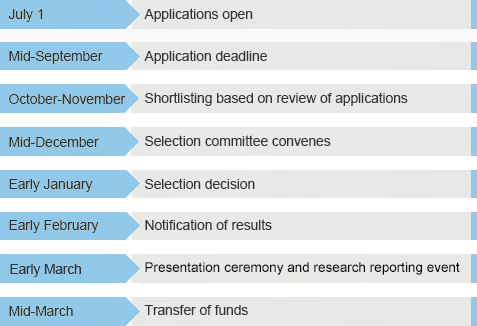
What are the deadlines?
Submission deadline: 30 June 2026, 11:59 p.m. (CEST)
Terms of submission:
The application must be sent by e-mail in one single PDF file (max. 15 MB) to:
E-mail: forschungspreis(at)ifa.de
Subject: Submission ifa Research Award – Name of the applicant
Jury
The award winners are selected by the Institut für Auslandsbeziehungen on the recommendation of an independent jury. The jury consists of 3 to 5 voting members from the academic or professional sectors.
The jury for the call for applications for the ifa Research Award on International Cultural Relations in 2026 will be the following:
Professor Nicole Colin (Aix-Marseille University)
Professor Eveline Dürr (LMU Munich)
Professor Julius Heinicke (University of Hildesheim)