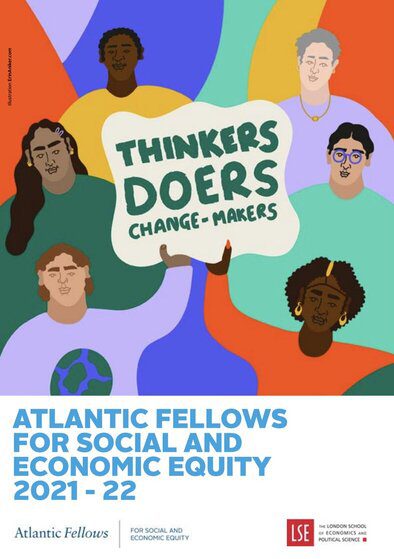
Applications are now open for the Atlantic Fellows for Social and Economic Equity (AFSEE) Programme 2027/2028, a fully funded, inequalities-focused fellowship based at the International Inequalities Institute at the London School of Economics and Political Science, with a closing deadline of January 11, 2027.
Policymakers, researchers, activists, practitioners, artists, and movement-builders from around the world are invited to apply to the programme, which is currently recruiting its eleventh cohort.
Who It Is For
The fellowship targets mid-career social-change leaders with at least seven years of experience challenging inequalities.
The field is deliberately wide. Applications are accepted from individuals working on any area of social and economic equity, including but not limited to economic and social rights; sustainability and environmental justice; tax justice and economic alternatives; women’s, minority, and disability rights; rights to education; public policy; housing and urban inequalities; labour rights; community organising; arts and culture; and peacebuilding and transitional justice.
That breadth is the programme’s signature: an artist documenting dispossession and an economist redesigning tax policy can sit in the same cohort, on the argument that inequality is fought on many fronts at once.
Two Tracks, Two Credentials
AFSEE runs on two parallel tracks, and the choice shapes what fellows walk away with.
Residential Track
Fellows on the Residential track spend one year in London undertaking the MSc in Inequalities and Social Science degree at LSE, alongside participation in the programme’s four bespoke fellowship modules across the year.
The modules feature contributions from academics, practitioners, campaigners, and civil society professionals, and focus on four themes: the foundations of social and economic inequalities, policy for equity, challenging and transforming inequality, and debates around inequality.
Non-Residential Track
Fellows on the Non-residential track remain in their home countries and work contexts during the active fellowship year, developing a practice-based project while joining their Residential counterparts online and in person for the fellowship modules.
Upon successful completion of the active fellowship year, Non-Residential Fellows are awarded a Postgraduate Certificate in Social and Economic Equity.
The two-track design makes the programme accessible to leaders who cannot relocate for a year, whether for family, work, or movement commitments, without diluting the academic content they receive.
Fully Funded
The programme is fully funded, covering the fellowship experience at one of the world’s leading social science institutions, with the residential route culminating in a full LSE master’s degree.
Application Deadline
The application deadline for the Atlantic Fellows for Social and Economic Equity Programme 2027/2028 is January 11, 2027. Prospective applicants should review the full requirements, funding details, and application procedure on the official programme webpage.
Frequently Asked Questions
Who can apply for the Atlantic Fellows AFSEE Programme?
Mid-career social-change leaders from around the world with at least seven years of experience challenging inequalities, working across fields from economic and social rights to environmental justice, tax justice, labour rights, arts and culture, and peacebuilding.
Is the fellowship fully funded?
Yes. The programme is fully funded, with the Residential track including one year at LSE undertaking the MSc in Inequalities and Social Science.
What is the difference between the two tracks?
Residential Fellows spend a year in London completing the LSE MSc alongside four bespoke modules. Non-Residential Fellows stay in their home countries, develop a practice-based project, join the modules online and in person, and earn a Postgraduate Certificate in Social and Economic Equity.
What credential does each track award?
The Residential track leads to the MSc in Inequalities and Social Science from LSE, while the Non-Residential track awards a Postgraduate Certificate in Social and Economic Equity upon successful completion.
What is the application deadline?
January 11, 2027, for the 2027/2028 cohort, which is the eleventh cohort of the programme.
Do I have to relocate to London?
Not necessarily. The Non-Residential track allows fellows to remain in their home countries and work contexts while participating in the fellowship modules remotely and earning the Postgraduate Certificate.